1 AUD trades near 196 LKR in May 2026, up from 145 LKR five years ago. Australian buyers now access Colombo apartments at the equivalent of AUD 165,000 that would have cost AUD 220,000 in 2020.
Apartments registered as condominium units can be owned 100% freehold by Australians under the Land (Restrictions on Alienation) Act No. 38 of 2014 and amendments. Apartments are fully ownable in your name.
350,000+ Sri Lankans live in Australia. Diaspora buyers have an information edge: family on the ground, neighbourhood knowledge, cultural familiarity with Sri Lankan property markets and customs.
Sri Lanka logged 2 million+ tourist arrivals in 2024, returning to pre-pandemic levels. 2026 is on track for a record year, driving short-stay yields on beachfront villas to 6–10% gross.
Home Lands Holdings is one of Sri Lanka's oldest residential developers — 6,000+ homes delivered across 12 active suburbs. CSE-affiliated, fully registered with the Condominium Management Authority on every project.
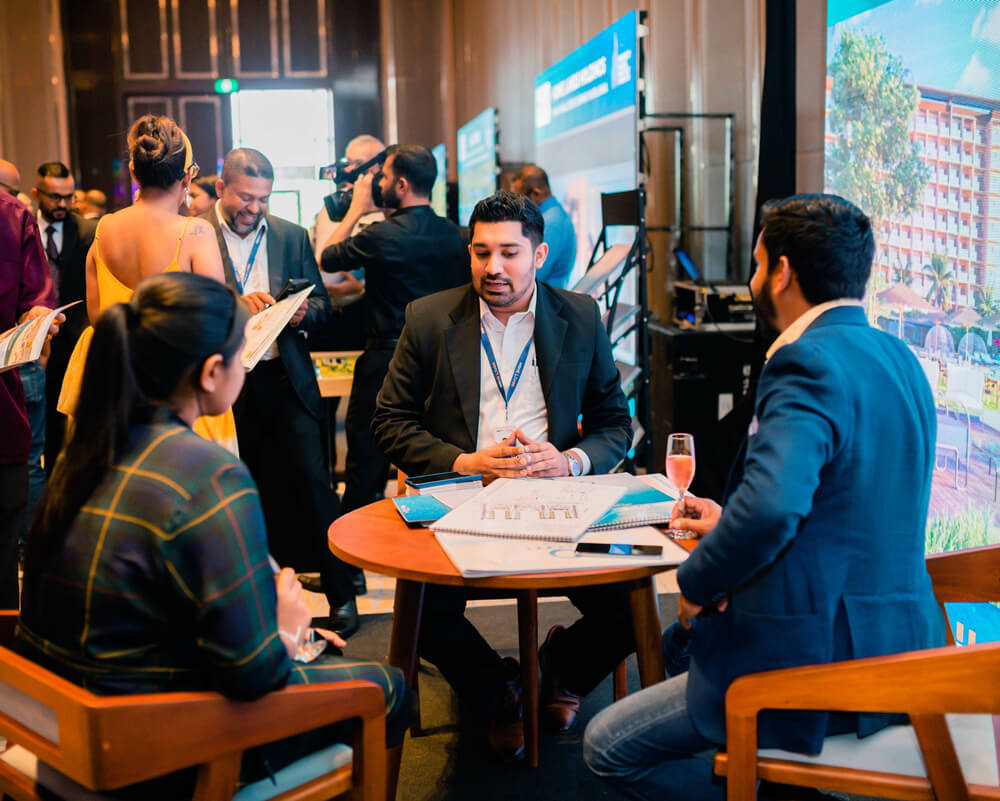
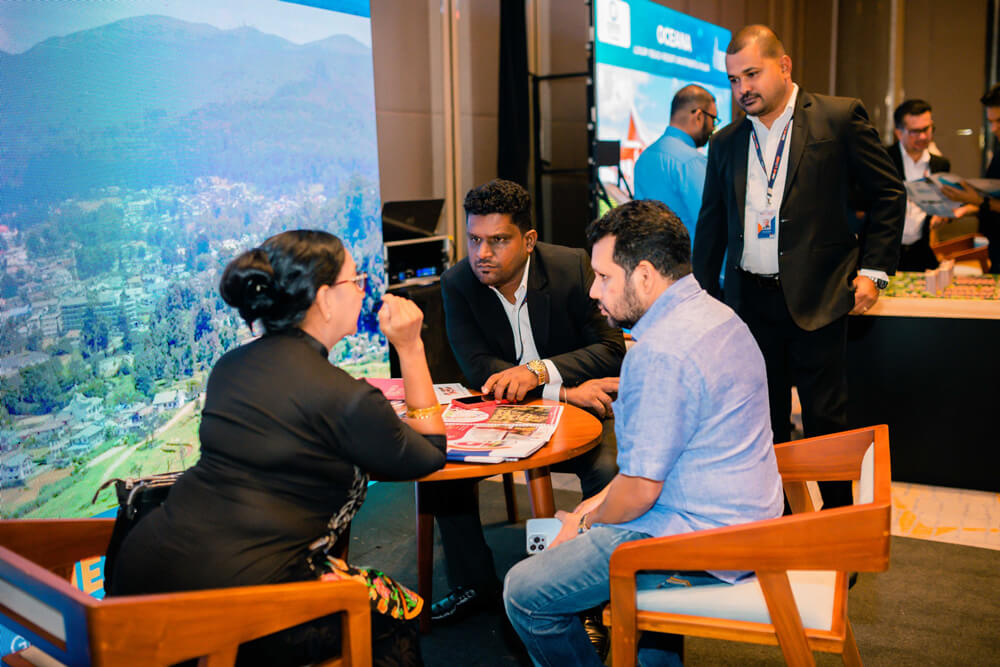
Our Blackburn (VIC) office handles every step of buying Sri Lankan property remotely — IIA setup, lawyer introductions, contract review, and remote signing. Book a 30-minute consultation.
Yes Australians can buy property in Sri Lanka. You may purchase apartments (condominium units, typically above the 4th floor) on full freehold ownership. Land cannot be bought freehold directly but can be leased for up to 99 years, or held via a Sri Lankan company with foreign shareholding capped at 49%. Most Australian buyers focus on apartments and complete the entire transaction remotely.
Three forces are converging. A strong Australian dollar currently trading near 196 LKR gives buyers from Melbourne and Sydney purchasing power that was unimaginable a decade ago. Sri Lanka's tourism rebounded past 2 million arrivals in 2024 and is on track for a record 2026, driving rental demand in Colombo and the south-west beach belt. And a large Sri Lankan-Australian diaspora is increasingly looking homeward for retirement homes, second residences, and intergenerational investment.
Sri Lankan-Australians have an information edge language, family on the ground, cultural familiarity with neighbourhoods. The investment thesis that takes a stranger six months to build, a diaspora buyer often validates in a single trip home.
Sri Lankan property law for foreigners is governed by the Land (Restrictions on Alienation) Act No. 38 of 2014 and its amendments (Act No. 3 of 2017 and Act No. 21 of 2018). These laws apply equally to Australian citizens and other non-Sri Lankans.
Foreigners may own apartments outright; they may lease land for up to 99 years; they cannot own freehold land directly in their personal name.
| Property type | Permitted for Australians? | Conditions |
|---|---|---|
| Condominium apartment (above 4th floor) | Yes — 100% freehold | Purchase price paid via inward foreign remittance; property must be legally registered as a condominium |
| Freehold land | No (not in personal name) | Workarounds: 99-year lease, or Sri Lankan company with ≤49% foreign shareholding |
| Land lease (up to 99 years) | Yes | 1% stamp duty on lease; 15% lease tax abolished January 2017 |
| Houses / villas (standalone) | Through 99-year lease or company structure | Same as land — the structure is treated together with the land it sits on |
| Resort villas in a registered development | Yes (often) | Treated as condominium parcels under the Apartment Ownership Law (Act 21 of 2018) |
| Inheritance / parental gift | Yes | Independent of foreign-ownership restrictions |
You will hear "foreigners cannot own property in Sri Lanka." This is wrong. Foreigners cannot own freehold land in their personal name. Apartments by far the most common Home Lands product are fully ownable.
From first enquiry to handover, an Australian buyer typically completes the transaction in 60 to 90 days. Most steps can be done remotely from Melbourne, Sydney, Brisbane or Perth.
Decide whether you want a Colombo apartment, suburban resort apartment, beachfront villa, or retirement property. Australians can buy any registered condominium apartment outright.
Most clients begin with a 360° virtual tour, a video call with the on-site project manager, and a development brochure with floor plans, pricing in AUD, and a delivery timeline.
An IIA is a special bank account at a Sri Lankan licensed bank that channels all foreign-investor funds in and out of the country. We coordinate the application with our preferred bank partners.
Pay the reservation deposit (typically 10%) and the SPA is drafted. An independent Sri Lankan lawyer should review it we can introduce you to two firms we work with regularly.
Transfer the remaining funds from your Australian bank account, through your IIA, to the developer's escrow. Keep the SWIFT receipt and the inward-remittance certificate both will be needed for the deed and for any future repatriation.
Settle the applicable taxes (VAT, stamp duty), pay notary fees, and sign the Condominium Deed of Transfer before a Sri Lankan notary public. Notary fees are typically 2–3% of price.
Take physical handover or appoint rental management. Net rental income flows back to your Australian bank account via the IIA, after Sri Lankan tax is settled.
This is the section most Australian buyers worry about and the section we spend the most time on with first-time clients. The mechanics are straightforward once you see them in order.
An Inward Investment Account is a special-purpose bank account at a licensed Sri Lankan commercial bank, designed specifically to receive foreign-investor capital and to repatriate it later. Every Australian-funded property purchase must flow through an IIA — this is what makes capital and gains repatriable in the original currency.
As of May 2026, 1 AUD ≈ 196 LKR. Two years ago it was around 165 LKR. Five years ago it was around 145 LKR. For Australian buyers paying in LKR, the apartment that cost the equivalent of AUD 280,000 in 2020 now costs around AUD 220,000 in real local-currency terms a structural advantage that may or may not persist.
The AUD has been strong against the LKR for the last five years. We do not forecast where it goes from here. But we tell every client: time the property, not the currency. Decisions made on a 12-month FX view rarely beat decisions made on a 10-year property view.
Sri Lankan property tax for foreign buyers is simpler than most Australians expect. There are no special "foreigner taxes" beyond what applies to Sri Lankan buyers. The headline numbers:
| Tax | Rate | When it applies | Who pays |
|---|---|---|---|
| VAT (primary market) | 18% | Apartments bought from the developer (new builds, primary sale) | Buyer |
| SSCL (Social Security) | 2.5% | Primary-market apartments only | Buyer |
| Stamp Duty | 3% on first LKR 100k, 4% thereafter | Every property transfer | Buyer |
| Stamp Duty (on lease) | 1% | Lease of land up to 99 years | Lessee |
| Capital Gains Tax | 10% flat | On gain at resale | Seller |
| Lease tax (foreign) | Abolished | Removed January 2017 — older sources may still mention 15% | — |
| Rental income tax | Per Sri Lankan PAYE/IRD rates | On rental income earned | Owner |
| Legal / notary fees | 2–3% of price | At deed execution | Buyer |
VAT applies only to primary-market apartments (i.e. when you buy directly from the developer in a new build). Resale apartments between two private parties do not attract VAT only stamp duty. This is an under-appreciated cost optimisation when comparing new vs resale stock.
Australian buyers should also consider their Australian tax obligations: rental income from Sri Lanka is assessable in Australia, with credit for Sri Lankan tax paid. Capital gains on the eventual sale may attract Australian CGT if you remain an Australian tax resident at that time. We strongly recommend a chat with an Australian tax adviser who has handled overseas property; we can refer two firms.
The Home Lands portfolio runs from entry-level Athurugiriya apartments under AUD 170,000 to luxury Pentara Residencies penthouses above AUD 500,000. Indicative ranges (subject to actual unit, floor, and FX):
| Tier | Locations | Typical AUD price | Indicative yield |
|---|---|---|---|
| Entry | Athurugiriya, Kahathuduwa | AUD 165,000 – 200,000 | 5–6% |
| Suburban resort | Malabe, Piliyandala, Negombo | AUD 200,000 – 280,000 | 5–7% |
| Inner Colombo | Rajagiriya, Nawala, Thalawathugoda | AUD 250,000 – 350,000 | 5–6% |
| Premium / Colombo 7 border | Thummulla, Jawatta | AUD 300,000 – 500,000+ | 4–6% (capital growth weighted) |
| Beachfront villas | Wadduwa, Negombo, Mount Lavinia | AUD 280,000 – 600,000 | 6–10% (with short-stay) |
| Retirement | Greendale Athurugiriya (50+) | AUD 166,000 – 240,000 | Capital-preservation focused |
These are not guarantees they are observed ranges from 2024–2025 transactions in our portfolio. Yield depends heavily on whether the unit is long-let to a Colombo professional, short-let on Airbnb in the resort belt, or held as a personal second home.
Every cautionary story we hear about foreign property purchases anywhere, not just Sri Lanka — traces back to one of three failures: a developer who couldn't deliver, a lawyer who didn't actually read the contract, or a deed that wasn't properly registered. Three checks defend against all three.
Check Colombo Stock Exchange listings (Home Lands group is CSE-listed), annual reports, the public Condominium Management Authority register, and the developer's delivery history. Ask for three completed projects with handover dates.
Use a Sri Lankan-qualified lawyer who is not referred by the developer. We will introduce you to a panel of firms we work with, but the engagement is between you and the lawyer, not between the lawyer and us.
For an apartment to be ownable by a foreigner, the development must be officially registered as a condominium with the Condominium Management Authority. Ask for the registration number and verify it directly on the CMA register.
Engage one lawyer in Sri Lanka and one in Australia. The Sri Lankan lawyer handles the deed, IIA, and local compliance. The Australian lawyer or tax adviser handles your Australian-side disclosure, CGT exposure, and estate-planning implications. Most issues we see arise from clients who skipped the second one.
Home Lands is one of Sri Lanka's oldest and largest residential developers over 20 years building and handing over homes, more than 6,000 units delivered. The Melbourne office exists to do one job: make the buying process as straightforward for Australians as buying in Australia.
Every listing on this site shows current AUD pricing, updated weekly with the prevailing rate. No mental gymnastics with LKR conversion.
360° virtual property tours, live video walk-throughs with on-site project managers, and complete documentation packs — all before you book a flight.
IIA setup, lawyer introductions, contract review timetables, remote signing via POA, handover inspection managed from our Blackburn office on Melbourne time.
If you want a hands-off investment, our affiliated rental management arm handles tenancy, maintenance and repatriation of net income to your Australian account.
The questions Australian buyers ask us most often. Each answer is intentionally short and direct so you can scan; click any question for the full explanation.
Yes. Australians can purchase apartments (condominium units, typically above the 4th floor) on full freehold ownership. They cannot buy freehold land directly but may lease land for up to 99 years, or hold land through a Sri Lankan company with foreign shareholding capped at 49%. Apartments by far the most common Home Lands product are fully ownable.
Primary-market apartments attract 18% VAT (introduced January 2024, raised from the 15% reintroduced in January 2023). Stamp duty is 3% on the first LKR 100,000 and 4% on the balance. A 10% flat Capital Gains Tax applies on resale. Legal and notary fees are typically 2–3% of the purchase price. VAT does not apply to secondary-market apartments transferred between private parties.
No. Most Australian buyers complete the entire transaction remotely through a Sri Lankan Power of Attorney. We arrange virtual property tours, video walk-throughs with the on-site team, contract review with independent lawyers, and notarised remote signing. Many of our clients visit only after handover, to take possession of a property they already own.
An IIA is a special-purpose bank account at a licensed Sri Lankan bank used by foreign investors to channel funds for property purchases. All foreign-investor funds for a Sri Lankan property must enter the country via the IIA. When you eventually sell, capital and gains can be repatriated through the same account in the original currency, making the AUD round-trip clean and auditable.
Generally no. Local mortgages are restricted to Sri Lankan citizens and dual citizens. Most Australian buyers fund the purchase from Australian equity, an Australian-side line of credit, or by drawing on home equity in Australia and remitting the proceeds through an IIA. A 2017–2018 budget proposal allowed foreigners to borrow up to 40% locally for condominiums; implementation has been patchy and we don't recommend relying on it.
Rental income is paid into your Sri Lankan account, then transferred to your IIA. From the IIA, funds can be remitted to your Australian bank in AUD, after Sri Lankan rental income tax has been settled. The 15% lease tax that previously applied to foreign land leases was abolished in January 2017 and you may still see it mentioned in outdated guides it no longer applies.
Sri Lanka has recovered substantially from the 2022 economic crisis. IMF-backed reforms are on track, the LKR has stabilised, tourism arrivals returned to pre-pandemic levels in 2024, and 2026 is on course for a record year. Investing through an established developer with a published delivery history, using an independent Sri Lankan lawyer, and channelling all funds through an IIA materially reduces the risks that a less-prepared buyer might face.
Entry-level Home Lands apartments start from around AUD 165,000 in outer suburbs like Athurugiriya and Kahathuduwa. Mid-tier resort apartments in Malabe, Piliyandala and Negombo run AUD 200,000 to AUD 280,000. Premium Colombo-border apartments — Pentara Residencies in Thummulla, Waterdale in Colombo 7 border — start around AUD 220,000 and rise to AUD 500,000+ for penthouse units.
A 99-year lease is essentially a long rental of land. You can build, live on, and transfer the lease, but the land reverts to the freeholder at the end of the term. Condominium ownership is full freehold ownership of an apartment unit, plus an undivided share in the common areas. For Australian buyers, condominium ownership is the simpler and more durable structure — which is why most of our Australian transactions are apartments, not leasehold land.
Four checks: (1) confirm the company is registered with the Registrar of Companies, (2) check listed status on the Colombo Stock Exchange if claimed, (3) request the project's condominium registration number from the Condominium Management Authority and verify it on the CMA register, (4) ask for three completed projects with handover dates and visit at least one virtually if needed. Home Lands has been CSE-affiliated and operating since 2006; ask any developer the same questions.
Each section above has a dedicated companion guide.
The legal pathways for Australian buyers, explained simply with current legislation references.
Read the guide →VAT, stamp duty, CGT and rental income tax explained with current 2026 rates.
Read the guide →Which ownership structure is right for an Australian buyer and why most should not even think about it.
Read the guide →Step-by-step on opening an IIA, what documents you need, and how repatriation works.
Read the guide →Our full portfolio of luxury and resort apartments, by area and bedroom count, priced in AUD.
Browse apartments →Suburb-by-suburb investor map: yields, transport, prices and active developments across 12 areas.
Explore locations →
Mon - Sun from 8.30AM to 5.00PM.
1300 455 888
Our friendly team is here to help.
[email protected]