Quick answer: Yes — if you’re an Australian citizen, a dual citizen or a non-resident Sri Lankan, you can buy an apartment in Colombo. Apartments (condominium units) are the one property type a foreign national can own outright in Sri Lanka, and since the 2018 amendment to the law you can buy on any floor, not just the fourth floor and above. The purchase price must be paid in full through an inward foreign remittance before the title is transferred. Entry-level two-bedroom units in Colombo start from around LKR 40–60 million, with prime and luxury stock running well past LKR 190 million.
If you’ve searched “apartments for sale in Colombo” from Australia, most of what you’ll find is classified-listing portals. This guide is different: it’s written for buyers purchasing from Australia Australian citizens, dual citizens and members of the Sri Lankan diaspora and it walks through eligibility, prices, the best areas, taxes and the exact process for buying and remitting funds from an Australian bank account.
Can Australians actually buy an apartment in Colombo?
This is where the detail matters, and where a lot of older guides are simply out of date.
Sri Lankan law treats land and apartments very differently, so your buyer type determines what you can purchase:
- Foreign nationals (including Australian citizens with no Sri Lankan citizenship): You can buy apartments (condominium units). You cannot take freehold title to land or standalone houses in your own name.
- Dual citizens (Australian + Sri Lankan): You are treated as a Sri Lankan citizen for property purposes. You can buy apartments, houses and land freehold with no floor restriction and no upfront-remittance condition.
- Non-resident Sri Lankans (NRSLs) Sri Lankan passport holders living in Australia: Same broad rights as resident citizens; you can buy apartments, houses and land.
For apartments specifically, the rules are now genuinely straightforward. Under the Land (Restrictions on Alienation) Act No. 21 of 2018, a foreign national may purchase a condominium parcel on any floor of the building the old restriction limiting foreigners to units on the fourth floor and above has been removed. The single condition is that the entire purchase price is remitted into Sri Lanka through an inward foreign remittance before the deed of transfer is executed.
Why this matters for your search: Many competing guides including some published in 2025 and 2026 still tell you foreigners can only buy “on the fourth floor and above.” That has not been the law since 2018. If a listing agent tells you the fourth-floor rule still applies, treat it as a sign they haven’t kept current.
The 100% “foreign land tax” that once applied to certain purchases was abolished in 2018 and does not apply to apartment buyers today. There is no special surcharge levied on you simply for being a foreign apartment buyer.
Not sure which category you fall into? See our overview of buying Sri Lankan property from Australia, or if you’re a dual citizen looking at freehold, our guide to houses and land.
Why Colombo apartments in 2026
Colombo’s condominium market is running hot at the top end even as it becomes more selective overall.
- New condominium prices in the Colombo District rose 18.5% year-on-year in the first quarter of 2026, according to published condominium market data, while sales volume eased back — a market being driven by premium, well-located stock rather than speculative churn.
- The Colombo District accounts for roughly 65% of all condominium sales nationally, so this is where liquidity and resale demand are concentrated.
- Condominium asking prices across the district rose about 11% year-on-year, and land prices in Colombo climbed close to 32% a reminder that the underlying real estate is appreciating, not stagnating.
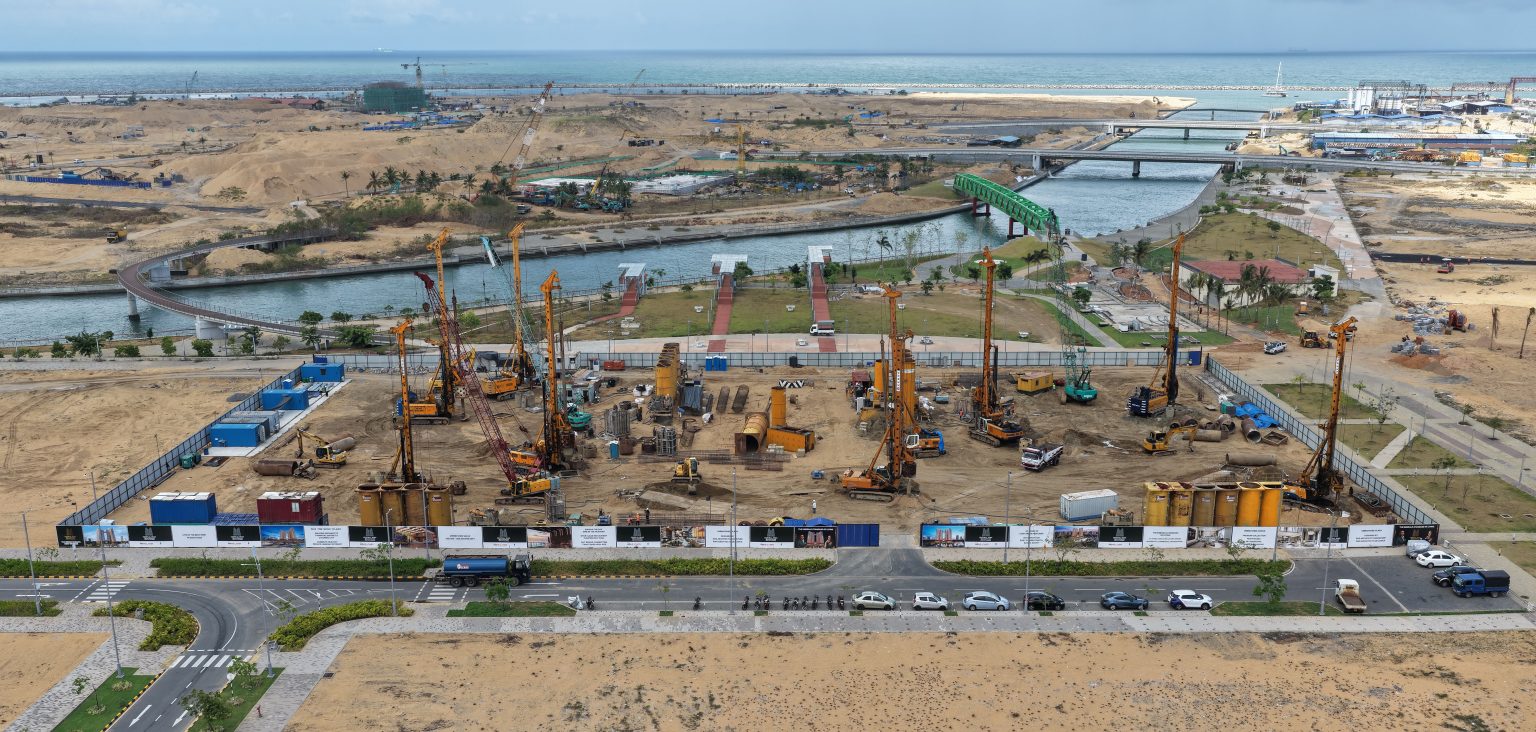
There’s a second reason the timing suits Australian buyers in particular. Colombo has become one of the most expensive cities in the world relative to local incomes but that same table shows it remains a value market for anyone earning in a stronger currency. When you’re converting Australian dollars, Colombo’s absolute prices sit well below comparable Australian capital-city apartments, while the city keeps modernising around Port City, One Galle Face and the Fort waterfront.
For diaspora buyers, there’s also the non-financial return: a foothold back home, a place for family, and an asset that can generate rental income while you’re in Australia.
How much do apartments in Colombo cost?
Prices vary enormously by zone, building and view. As a working guide for 2026:
| Segment | Typical price (LKR) | Indicative AUD* |
|---|---|---|
| Entry-level 1–2 bedroom (emerging zones like Colombo 6, 8) | LKR 40M–70M | ~AUD 195k–340k |
| Mid-market 2–3 bedroom (well-connected suburbs) | LKR 70M–120M | ~AUD 340k–585k |
| Prime 3 bedroom (Colombo 2, 3, 7 towers) | LKR 120M–210M | ~AUD 585k–1.0M |
| Luxury / penthouse / sea view | LKR 190M+ | ~AUD 925k+ |
City-centre apartments in Colombo average in the order of LKR 108,000 per square foot at the premium end, though mid-market stock sits well below that. Super-luxury towers can exceed LKR 100,000 per square foot, while established mid-range buildings often trade closer to LKR 55,000–65,000 per square foot.
A note on Australian dollar figures: AUD conversions above are indicative only, calculated at an approximate rate and rounded. Exchange rates move daily always confirm the live AUD/LKR rate before budgeting, and remember you’ll remit in a way that satisfies Sri Lankan inward-remittance rules (see the process section below).
Best areas to buy an apartment in Colombo
Colombo is divided into 15 numbered postal zones (Colombo 1 to Colombo 15). Here’s how the most relevant ones stack up for an overseas buyer:
- Colombo 1 & 2 (Fort / Slave Island): The commercial and waterfront core — Port City, One Galle Face, the highest concentration of luxury towers. Strongest prestige and rental appeal; highest entry prices.
- Colombo 3 (Kollupitiya): Central, walkable, sea-facing towers and premium retail. A blue-chip choice for capital preservation.
- Colombo 4 (Bambalapitiya): Established residential-commercial mix, good schools and transport, slightly more accessible than 3.
- Colombo 5 & 6 (Havelock Town / Wellawatte): Popular with families and long-term tenants; better value per square foot and reliable rental demand.
- Colombo 7 (Cinnamon Gardens): The most exclusive address in the city — leafy, low-rise, high-value.
- Colombo 8 (Borella): Central, improving, and one of the more affordable central zones for a first purchase.
- Rajagiriya / Battaramulla (Colombo suburbs): Fast-growing corridor toward the administrative capital; newer stock, strong owner-occupier and rental interest.
For a first overseas purchase, buyers weighing resale liquidity tend to favour Colombo 2, 3 and 4; buyers optimising rental yield and entry price often look at Colombo 5, 6 and 8 or the Rajagiriya corridor.
How to buy an apartment in Colombo from Australia
Buying remotely is routine thousands of diaspora buyers do it every year but the sequence matters, especially the remittance step.
- Confirm your eligibility and shortlist. Decide whether you’re buying as a foreign national (apartments only) or a dual citizen / NRSL (any property type). Shortlist buildings by zone, budget and whether you want ready-built or off-plan.
- Reserve the unit. Pay a reservation/booking fee to hold the specific unit while contracts are prepared. Get the reservation terms and the full price schedule in writing.
- Open the correct remittance channel. For a property purchase and later repatriation, funds should flow through an Inward Investment Account (IIA) at a Sri Lankan licensed bank. The IIA is the current vehicle for foreign property investment and repatriation (it replaced the older NRFC/RFC arrangements under the 2021 Central Bank directions). Your funds travel from your Australian bank into the IIA and out to the seller as a documented inward foreign remittance.
- Do your due diligence. Engage a Sri Lankan attorney-at-law to run a title search, confirm the building is registered as a condominium under the Apartment Ownership Law, and verify Condominium Management Authority registration and the developer’s approvals. This step protects your ability to repatriate later.
- Sign and settle. Execute the sale-and-purchase agreement, pay per the schedule (via the IIA), and complete the deed of transfer for foreign nationals, the full price must be remitted before the deed is executed.
- Register and retain records. Register the deed, and keep every remittance record. To repatriate sale proceeds in future, you must be able to prove the original purchase was funded by inward remittance.
Keep every bank advice, IIA statement and remittance confirmation. The paperwork you file now is exactly what lets you send money back to Australia when you sell.
Taxes and costs to budget for
Apartment buyers should plan for the following (all general, not personal tax advice):
- No special foreign-buyer property tax. There is no extra purchase tax levied solely because you are a foreign national.
- VAT: An 18% VAT rate has applied since January 2024 and can affect the price of certain new/developer sales — confirm whether a given price is VAT-inclusive.
- Capital Gains Tax: A flat 10% CGT applies on gains when you sell.
- Land Lease Tax: The former 15% lease tax was abolished in January 2017 and does not apply to leases entered into after that date.
- Transaction costs: Budget for stamp duty, legal/attorney fees, and any developer or association charges.
- Financing: Foreign nationals generally cannot obtain local Sri Lankan mortgages; apartment purchases are typically cash/remittance-funded. Dual citizens and NRSLs may be eligible for local financing.
Off-plan vs ready-to-move-in
- Ready-built: You see the exact unit, view and finish; you can move in or rent immediately; usually higher price per square foot.
- Off-plan: Lower entry price and staged payments, potential capital growth by completion, and first pick of floors and views — but you’re buying on plan, so the developer’s track record and delivery history matter enormously. For overseas buyers who can’t inspect in person, buying off-plan from a developer with a long completion record substantially reduces risk.
Buying with Home Lands
Home Lands is a long-established Sri Lankan residential developer with an Australian sales office in Melbourne, so diaspora and Australian buyers can handle the whole purchase — shortlisting, reservation, remittance guidance and due-diligence coordination — in Australian business hours and Australian English.
Browse current apartments for sale in Sri Lanka, or talk through eligibility and the remittance process with the Melbourne team before you reserve.
Home Lands Melbourne Unit 3, 184 Whitehorse Road, Blackburn VIC 3130 Phone: 1300 941 772
Frequently asked questions
Can a foreigner buy an apartment on the ground or first floor in Colombo? Yes. Since the 2018 amendment (Act No. 21 of 2018), foreign nationals can buy a condominium unit on any floor, provided the full purchase price is remitted through an inward foreign remittance before the deed of transfer. The old “fourth floor and above” restriction no longer applies.
Do I need to travel to Sri Lanka to buy? No. Purchases are routinely completed remotely from Australia through a Sri Lankan attorney and the correct banking channel. Many diaspora buyers never travel for settlement, though an inspection or a trusted local representative is wise for off-plan purchases.
How do I send money from Australia to pay for the apartment? Through an Inward Investment Account (IIA) at a Sri Lankan licensed bank. Funds move from your Australian bank into the IIA and are paid to the seller as a documented inward remittance this is also what enables you to repatriate proceeds when you sell.
Can I get the money back to Australia when I sell? Yes, subject to exchange-control compliance. You’ll need to prove the original purchase was funded by inward remittance, which is why keeping every remittance record from day one is essential.
Can I get a Sri Lankan home loan as an Australian? Generally not as a foreign national apartment purchases are typically funded by remittance rather than a local mortgage. Dual citizens and non-resident Sri Lankans may be eligible for local financing.
Is buying an apartment enough to get residency? Buying property does not by itself grant residency. Separate visa pathways exist for longer stays; consider these independently of the purchase.
This article is general information only and does not constitute legal, tax or financial advice. Property laws, tax rates and exchange-control rules change and depend on your circumstances. Confirm your position with a qualified Sri Lankan attorney-at-law and a licensed financial or tax adviser before committing to a purchase.